


In the wake of a global pandemic that redefined economic landscapes, financial institutions find themselves navigating a new frontier of credit risk management. The seismic shift brought on by COVID-19 has not only reshaped consumer behavior and business operations but also exposed vulnerabilities in traditional risk assessment models. As economies gradually stabilize, banks and financial entities are recalibrating their strategies, employing innovative technologies and data-driven insights to safeguard their portfolios. This article delves into the transformative approaches being adopted by financial institutions worldwide, offering a comprehensive analysis of how they are fortifying their defenses against credit risk in this post-COVID era. Through a blend of cutting-edge solutions and time-tested principles, these institutions are charting a course toward resilience and stability, ensuring they remain robust pillars of the global economy.
Navigating New Norms Strategies for Assessing Creditworthiness in Uncertain Times
In the wake of the pandemic, financial institutions are recalibrating their approach to assessing creditworthiness. The traditional metrics that once served as reliable indicators are being supplemented with more dynamic and comprehensive strategies. Data analytics has emerged as a pivotal tool, allowing lenders to delve deeper into customer profiles and behavior patterns. By leveraging machine learning algorithms, institutions can now predict credit risk with greater accuracy, considering factors like cash flow volatility and industry-specific impacts.
Moreover, financial entities are adopting alternative data sources to paint a more holistic picture of a borrower’s financial health. These include:
- Utility and rental payment histories
- Social media activity
- Online transaction behaviors
Such data points, often overlooked in pre-pandemic times, are now integral to credit risk assessment, enabling lenders to make more informed decisions in these uncertain times.
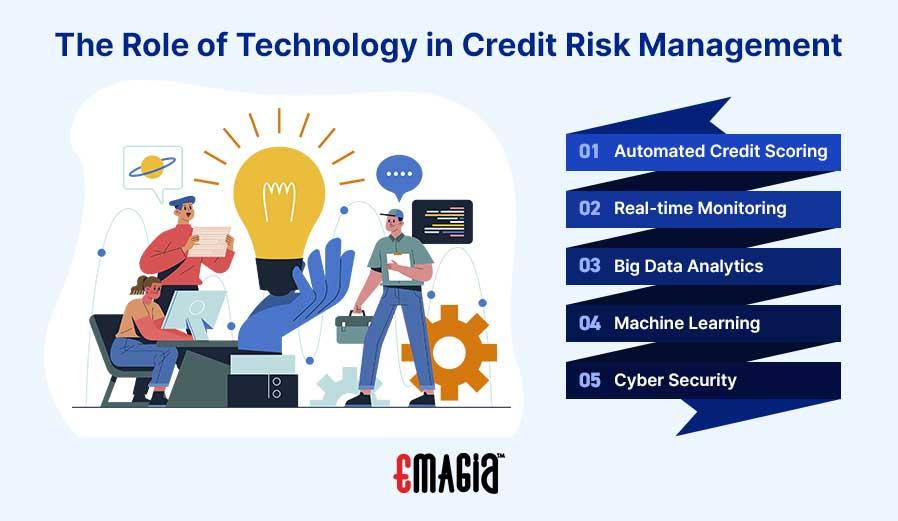
Harnessing Technology AI and Big Data as Pillars of Modern Credit Risk Management
In the wake of the pandemic, financial institutions are increasingly relying on Artificial Intelligence (AI) and Big Data to redefine credit risk management strategies. These technologies serve as the backbone for innovative solutions that enable banks and lenders to not only assess but also predict credit risk with unprecedented accuracy. AI algorithms can analyze vast datasets to identify patterns and trends that would be impossible for human analysts to detect. This capability allows for more nuanced credit scoring models that take into account a wider range of factors, providing a more comprehensive view of a borrower’s creditworthiness.
Big Data complements AI by offering a treasure trove of information from diverse sources such as social media, transaction histories, and market trends. By leveraging these insights, financial institutions can develop a multi-dimensional understanding of risk factors. Key benefits include:
- Enhanced decision-making: Real-time data analysis leads to quicker and more informed credit decisions.
- Improved risk assessment: More accurate risk profiling helps in reducing default rates.
- Cost efficiency: Automation of risk management processes reduces operational costs.
- Regulatory compliance: AI-driven analytics ensure adherence to ever-evolving regulatory standards.
By harnessing these technologies, financial institutions are not just managing risk more effectively but are also paving the way for a more resilient and adaptable financial ecosystem.
Strengthening Resilience Building Robust Risk Mitigation Frameworks
In the wake of the COVID-19 pandemic, financial institutions have embarked on a transformative journey to enhance their risk mitigation strategies, focusing on fortifying their resilience against credit risk. This endeavor is not just about weathering the storm but thriving in the face of uncertainty. By leveraging cutting-edge technologies and innovative approaches, these institutions are crafting frameworks that are both robust and adaptable.
- Data-Driven Insights: Harnessing the power of big data and analytics to gain deeper insights into borrower behavior and market trends.
- Advanced Stress Testing: Implementing more rigorous stress tests to evaluate the impact of extreme scenarios on credit portfolios.
- Enhanced Credit Scoring Models: Utilizing machine learning algorithms to refine credit scoring, offering a more nuanced assessment of creditworthiness.
- Dynamic Portfolio Management: Adopting agile portfolio management techniques to swiftly adjust to changing economic conditions.
These strategic initiatives underscore a commitment to not only manage risk but to anticipate and adapt to future challenges, ensuring that financial institutions remain resilient in an ever-evolving landscape.
Collaborative Approaches Partnering with Fintechs for Enhanced Risk Solutions
In the rapidly evolving financial landscape, traditional financial institutions are increasingly seeking synergistic partnerships with fintech companies to bolster their credit risk management strategies. These collaborations offer a blend of innovation and experience, enabling banks and other financial entities to harness cutting-edge technologies and data analytics for more precise risk assessment. By leveraging fintech solutions, institutions can access:
- Advanced data analytics for real-time risk monitoring
- AI-driven predictive models to anticipate credit defaults
- Blockchain technology for enhanced transparency and security
Such partnerships are not just about adopting new technologies but also about fostering a culture of agility and innovation. Fintechs bring a fresh perspective and a willingness to experiment, which, when combined with the vast resources and regulatory expertise of traditional institutions, can lead to the development of robust, adaptable risk management frameworks. This collaborative approach ensures that financial institutions remain resilient and responsive in a post-COVID world, where the dynamics of credit risk are continually shifting.